

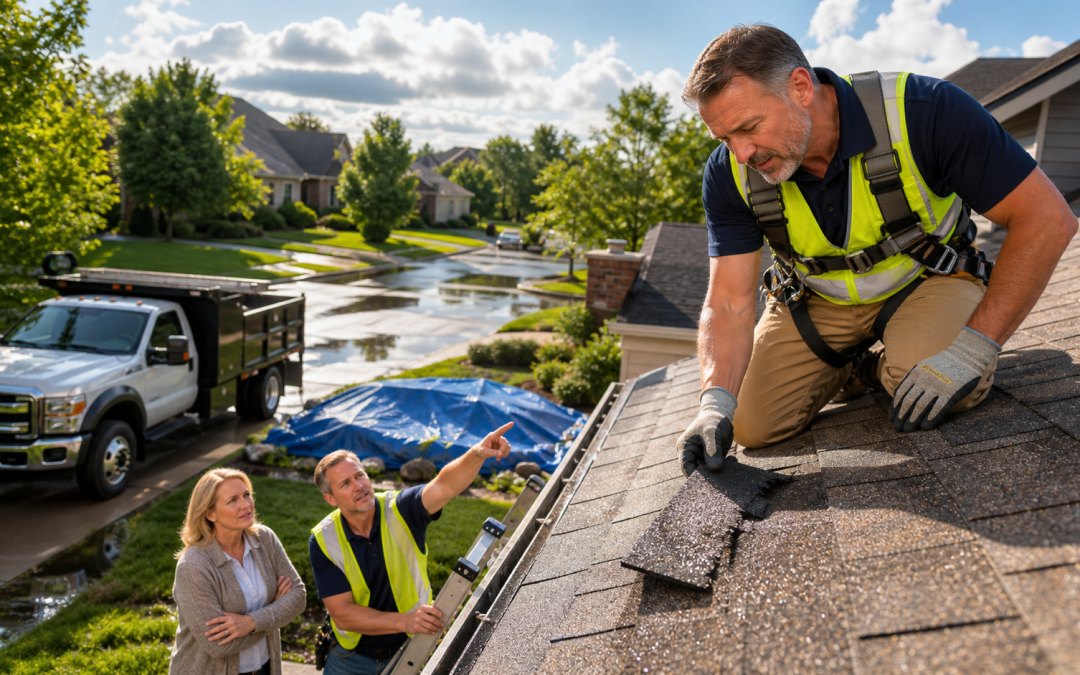
When Summer Storms Turn Minor Cracks Into Major Leaks
Summer storms can quickly turn a quiet evening into a stressful situation inside your home. Hail, high winds, and heavy rain arrive just as many families are spending more time outdoors. While you are focused on daily routines, your roof is absorbing the full impact of every storm.
Tiny shingle cracks from spring temperature swings may not look serious at first. All it takes is one strong storm for those hairline cracks to open up, allow water in, and turn into leaks in your attic or ceilings. What seems small on the surface can lead to soaked insulation, mold risk, damaged drywall, and repairs that are much more extensive than a timely roof fix.
This guide gives homeowners a clear action plan. When a storm hits, you should know what to do, what to avoid, when to call a professional, and how to work with your insurance company with less stress.
First Hour After the Storm
Your first priority is safety, not roof repair. Even if you are worried about water coming in, do not put yourself in danger to check for damage.
Right after the storm:
- Wait until lightning, strong wind, and heavy rain have fully passed
- Stay away from downed power lines, damaged trees, and loose branches
- Do not climb on the roof or up shaky ladders
Once conditions are calm, take a slow walk around your home. Stay on the ground and use binoculars or your phone camera zoom to look for issues such as:
- Missing or curled shingles
- Bent or hanging gutters
- Damaged vents or metal flashing
- Debris piled in one spot on the roof
If you see active leaks, dripping water, or ceiling bulges inside, keep people and pets out of that area. If it is safe and you know how, you can turn off electricity to that part of the house until a professional checks it.
If attic access is easy and safe, you can do a brief check with a flashlight:
- Damp or matted insulation
- Fresh water stains on wood or drywall
- Spots where you see daylight through the roof
Take clear, time-stamped photos of anything that looks unusual, inside and outside. These early pictures help both your roofing professional and your insurance adjuster understand what happened.
Call for emergency help right away if you notice:
- Active dripping from ceilings or light fixtures
- Sagging or soft ceilings
- Large branches resting on the roof
- Areas where the wood decking is exposed
In these situations, a professional may install an emergency tarp or make a temporary repair to slow the water intrusion until full repairs or replacement are completed. Prompt assistance can limit interior damage and help reduce the risk of mold.
Spotting Hidden Roof Damage You Cannot Ignore
Not every storm-related issue is easy to see from the yard. Some of the most serious problems are subtle at first.
Watch for warning signs such as:
- Fine cracks along shingle surfaces
- Soft or bruised spots from hail that give way under pressure
- Lifted shingle edges that let wind-driven rain get underneath
Hail can knock off the protective granules on shingles, and high winds can break the seal that keeps shingles tight to the roof. You might not see an immediate leak, but the roof may have lost part of its protection. This can shorten its service life and set you up for future leaks with the next round of storms.
This is where professional inspections are important. A trained roofing specialist uses:
- Appropriate safety gear to walk the roof correctly
- Knowledge of local storm patterns
- Experience to distinguish normal aging from fresh storm impact
A thorough inspection evaluates the entire roof system, including shingles, flashing, vents, skylights, chimney caps, and gutters. A detailed report with photos and clear notes provides a better picture of the roof’s condition and supports any insurance claim you might file.
It is also helpful to keep a simple storm file that includes:
- Date and time of the storm
- Weather notes, such as hail, high wind, or heavy rain
- All photos and videos of your roof, siding, and yard
- Copies of emails and texts with your roofing professional and insurer
This type of record helps reduce confusion later about what was caused by a specific storm versus normal aging.
Calling Your Insurer and Choosing a Roofing Professional
Once you suspect there may be damage, contact your insurance company. Before you call, review your policy so you understand basic terms such as your deductible and coverage limits.
When you report, indicate that you have possible storm-related damage. Share your photos, but do not try to estimate the level of damage or commit to repairs you cannot safely manage yourself. Your insurer will usually give you a claim number and schedule an adjuster to visit your property. They may ask you to obtain estimates from qualified roofing contractors.
Selecting the right roofing professional is equally important. Look for a contractor that:
- Has an established presence and history in the community
- Carries proper insurance and follows safety standards
- Has experience with storm-related roof repairs and insurance work
- Communicates clearly and answers questions without pressure
Be cautious of temporary crews that arrive immediately after a large storm, push for quick decisions, or offer bids that are far below others. A reputable local roofer can often meet your adjuster on-site, walk the roof together, and explain technical findings in clear, straightforward language.
A solid estimate should describe:
- The full scope of work and materials
- Underlayment, flashing, and ventilation details
- Any code upgrades that may be required
Your policy may be based on actual cash value or replacement cost. There can also be supplements if hidden damage is found once work begins. Ask about repair versus full replacement, how long the new system is expected to last, and what warranties apply to both products and labor.
From Temporary Fixes to Long-Term Protection
After a major storm, a tarp or quick patch can be an appropriate short-term measure. Temporary fixes are helpful when you have:
- Active leaks
- Exposed sheathing or deck boards
- A cluster of missing or broken shingles
These measures should be properly secured and documented with photos. Most insurers expect homeowners to take reasonable steps to prevent additional damage, and this kind of stopgap can demonstrate that you did your part. Keep in mind, however, that a tarp is not a long-term solution. Leaving a temporary fix in place too long can trap moisture, lead to hidden structural issues, and complicate future claims.
As the full repair or replacement moves forward, your contractor will confirm the scope once the roof is opened. Hidden problems, such as damaged decking, may appear, and any changes can be discussed before work continues.
When planning the new system, consider options such as:
- Shingles with enhanced impact and wind resistance
- Upgraded underlayment for added moisture protection
- Improved attic ventilation for roof health and indoor comfort
Comprehensive storm-related roof work often involves more than shingles alone. Gutters, fascia, soffits, and other exterior elements may also need attention so the entire system functions correctly.
Before work starts, a small amount of preparation is helpful:
- Move vehicles away from the house
- Cover items in the attic or upper-level storage
- Take fragile items off shelves or walls that might vibrate
During the project, you can expect noise, crew traffic, and some debris, but a reputable crew will manage cleanup and keep the work area as orderly as conditions allow. Ask for a clear timeline so you can plan around family events and understand what to expect each day.
Frequently Asked Questions About Summer Storm Roof Damage
How Do You Know If Roof Damage Is From This Storm?
Roofing professionals and adjusters look at damage patterns, shingle age, and surrounding property conditions. Fresh hail and wind damage usually have a different appearance than long-term wear. Prompt inspections and timely claim filing make it easier to connect damage to a specific storm date.
Will Insurance Premiums Automatically Go Up If You File?
Rate changes depend on many factors. Weather events often affect entire areas, not just one homeowner, and leaving serious damage unaddressed can lead to larger, more expensive problems in the future.
Can You Wait Until Fall to Fix a Summer Storm Issue?
Delaying repairs allows additional storms and extreme heat to act on already weakened materials. Shingles can fail faster, and small leaks can develop into major interior problems. A qualified roofing company can help you address urgent repairs now and plan larger projects as schedules and materials allow.
What Makes a Roof Better Prepared for the Next Storm Season?
Key steps include using quality materials rated for local wind and hail conditions, correct flashing, solid sheathing, and clear, well-sloped gutters. Regular inspections, especially after major storms, help catch small problems before they become serious. Acting early helps protect your home, maintain comfort, and support long-term peace of mind.
Get Started With Your Project Today
If your roof has been hit by wind, hail, or heavy rain, we can inspect the damage and guide you through clear next steps. Our storm damage roofing services are designed to restore your home quickly while maintaining high-quality workmanship. We handle everything from emergency repairs to full replacements, keeping you informed at every stage. Reach out to Act Roofing & Restoration through contact us to schedule your inspection today.