

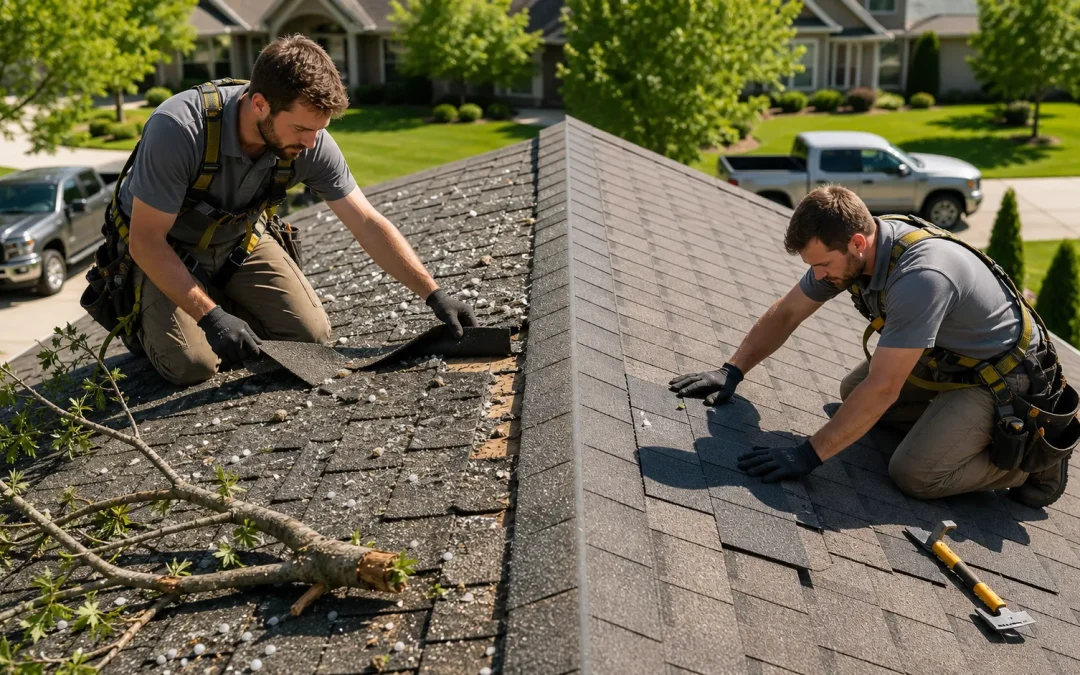
Stop Guessing: Know If Your Roof Has Storm Damage
Storms can be loud, scary, and over in a flash, but what they do to your roof can last a long time. The tricky part is that roof damage is not always obvious from the ground. Sometimes everything looks fine until a leak shows up months later.
There is a big difference between sudden storm damage and normal aging. In a place like Edina, with snow, ice, strong winds, and hail, your roof takes a beating from both. Storm damage roofing repair often falls under insurance, while slow wear and tear usually does not. Knowing which is which can keep you from paying out of pocket for something your policy might have covered.
How Storms Damage Your Roof in Minnesota
Around Edina, we see the same weather patterns again and again. Each type of storm hits your roof in its own way.
Common storm threats include:
- Hail that hits shingles, vents, and flashing
- High winds that lift or tear shingles and ridge caps
- Heavy rain that finds weak spots and small gaps
- Ice and snow that add weight and cause ice dams
- Freeze-thaw cycles that open up small cracks into bigger problems
Hail is one of the biggest troublemakers. When hail hits shingles, it can:
- Knock off the protective granules on the surface
- Leave soft bruises you can feel but not always see
- Create hairline fractures that weaken the mat under the granules
Even if you do not see missing shingles or leaks right after a storm, hail damage can shorten the life of your roof. Once granules are gone or the mat is cracked, shingles age faster and are more likely to fail later.
Some signs of hidden storm damage that homeowners often miss are:
- Dents in metal flashing, vents, or gutters
- Soft spots when walking on the roof
- Shingles that are lifted, creased, or not laying flat
- Tiny gaps around chimneys, skylights, or wall joints
These issues usually need a close, hands-on inspection to spot, which is why a professional eye is so important.
Ordinary Roof Wear vs. True Storm Damage
All roofs age. Even with no big storms, sunlight, temperature swings, and time slowly wear things down. The key is knowing what looks normal for an older roof and what points to storm damage roofing repair.
Typical aging or wear often looks like:
- Gradual color fading across large areas
- Slow, even granule loss showing more black spots over time
- Curling or cupping shingles, especially on sunny sides
- Minor cracking that follows the age of the roof, not a storm path
True storm damage usually looks different. It is more sudden, more random, and often lines up with the direction of the recent weather. Storm damage might show up as:
- Circular or random impact marks from hail, with missing granules
- Broken, torn, or flipped shingles after strong winds
- Damage clustered on one slope that faced the storm
- Fresh dents on metal parts that were smooth before
Insurance companies often draw a hard line between these two categories. In simple terms:
- Covered storm damage is sudden and accidental, like hail hits or wind tearing off shingles.
- Maintenance and wear are slow changes the homeowner is expected to manage over time.
For example, a roof with even fading, some curling edges, and older sealant is usually seen as normal aging. A roof with new hail bruises, dented vents, and wind-torn shingles after a strong storm is more likely to qualify for storm damage roofing repair under an insurance claim.
Insurance Claims for Storm Damage Roofing Repair
When storms roll through Minnesota, many homeowners are not sure what to do first. Calling insurance right away might feel natural, but having a professional roofer look at the damage before that call often works out better.
A basic storm-related roofing claim usually follows steps like these:
- Get a professional inspection after a significant storm.
- Document all damage with photos, notes, and measurements.
- Review your policy so you understand your coverage and deductibles.
- Have your roofer present when the adjuster visits, if possible.
- Compare the adjuster’s findings with your roofer’s report.
A contractor experienced with storm damage will:
- Take detailed photos from different angles and distances
- Note the number of damaged shingles, slopes, and accessories
- Check gutters, flashing, vents, and other components, not just the shingles
- Prepare a clear summary to support a fair claim outcome
Common mistakes we see homeowners make include:
- Calling insurance before they know how bad the roof really is
- Accepting a quick payout that only covers part of the needed work
- Not reading their policy, especially around exclusions and time limits
- Waiting too long to act, which can make damage worse and harder to prove
Addressing storm issues before the deep winter cold arrives can prevent leaks, ice dams, and interior damage when snow piles up.
Choosing the Right Repair Strategy Before Winter Hits
Not every roof problem needs a full replacement. The right plan depends on age, damage, and any past issues.
In general:
- Simple repair: A newer roof with a few damaged shingles or minor flashing issues.
- Storm damage roofing repair via insurance: A roof with clear hail or wind patterns that match a recent storm.
- Full replacement: An older roof with both age-related wear and heavy storm damage, or repeated leak history.
Seasonal timing matters in Minnesota. Before winter, it is smart to:
- Address any known leaks or soft spots so snowmelt has no easy path inside
- Fix loose shingles or flashing that wind and ice could grab onto
- Confirm gutters and downspouts are secure to handle melting snow
When thinking about long-term costs and benefits, consider:
- Patching can work for small, isolated issues but may leave weak spots if the roof is already near the end of its life.
- A stronger, more resilient roofing system can better handle future hail, wind, and freeze-thaw cycles.
- Quality storm repairs or replacement can help avoid repeated service calls and surprise interior damage down the road.
A professional inspection can help you decide if it makes sense to repair now, file a claim, or plan for a full replacement.
Partner with a Local Pro Who Knows Storm Damage
After a big storm, it can be tempting to ignore the roof if you do not see drips or missing shingles. But many serious issues start small and quiet. A professional inspection from someone who understands local weather patterns can catch trouble early and give you clear options.
Working with a local, family-owned roofing contractor familiar with Minnesota codes and insurers offers some real advantages. They know how our roofs respond to snow, ice, hail, and wind, and they understand what adjusters look for in storm damage roofing repair claims.
At Act Roofing & Restoration, we focus on careful inspections, honest feedback, and helping homeowners and business owners in the Edina area understand whether a roof issue is storm-related or just normal aging. That way, you are not guessing about your roof or your insurance coverage, and you can move forward with a plan that fits your situation.
Restore Your Roof And Peace Of Mind After The Storm
If your home has taken a hit from recent weather, we can guide you through every step of storm damage roofing repair, including the insurance process. At Act Roofing & Restoration, we inspect the damage, document everything clearly, and help you move from uncertainty to a solid plan of action. Reach out today through our contact page so we can schedule an inspection and get your roof protected again as quickly as possible.