

Protect Your Roof Claim in the First 72 Hours
When a storm hits, the first few days can significantly affect an insurance claim for roof damage. What you document, how you document it, and what you save during that 72-hour window can influence how smoothly your claim proceeds and how fully your home is restored.
In this article, we outline what to document right away, how to do it safely, and how to maintain a clear record that supports your claim. As a family-owned roofing and storm damage restoration company established in 1992, with decades of experience in hail, wind, and insurance-related roof claims, we understand how critical early, accurate documentation is. Our goal is to help you feel prepared before the next major storm.
Safety First and Fast Documentation After a Storm
Safety must always be the first priority. Storm damage is not always obvious, and the roof is one of the most dangerous areas around your home after high winds or hail.
Immediately after the storm passes, do not climb on the roof. From safe ground level locations, watch for:
- Downed or sagging power lines
- Loose or dangling shingles and metal pieces
- Broken glass around windows or patios
- Water leaks, drips, or stains inside your home
Always contact trained professionals for any roof inspection. Ladders, wet surfaces, and hidden structural or impact damage can lead to serious injuries.
In the first few hours, you can still gather important details from safe areas:
- Write down the date and time of the storm
- Save any weather alerts or warnings you received
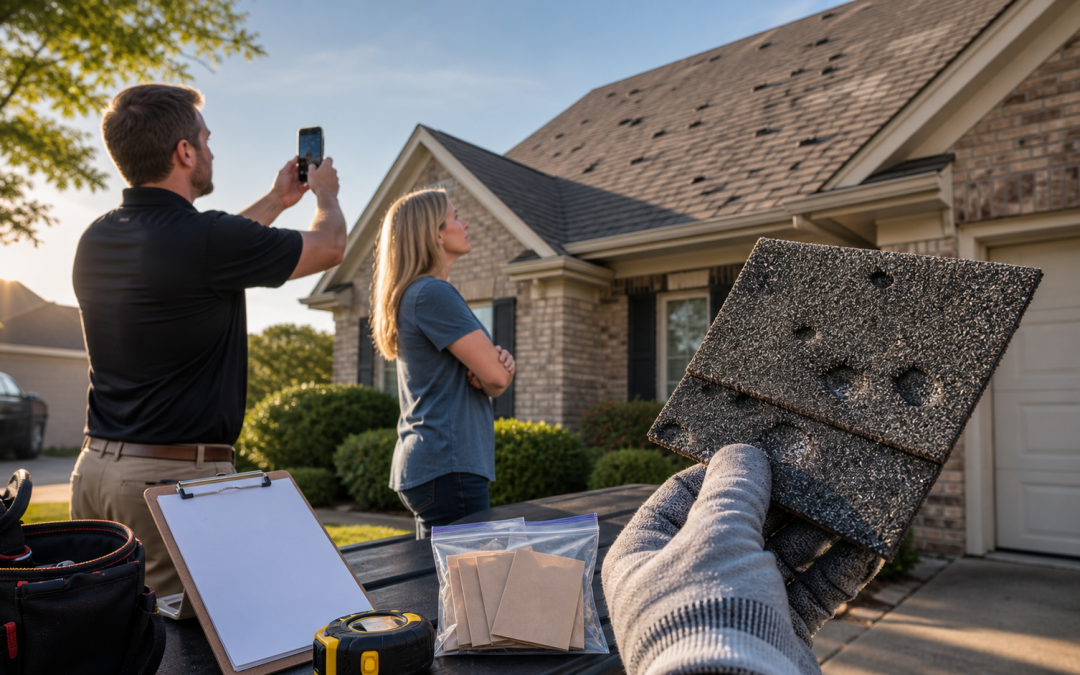
- Take wide photos of your home from all four sides
- Take closer photos of visible damage from the ground, such as bent gutters or torn siding
Early, organized notes and photos help demonstrate that the storm caused the damage and when it occurred. Many homeowners do not notice subtle signs of hail or wind damage, such as bruised shingles or hairline cracks in siding or windows. This is where trained roofing and storm damage restoration technicians can assist by inspecting areas of the roof, siding, and windows that are not visible from the ground and may require a professional evaluation.
Essential Photos and Videos Your Adjuster Needs to See
Clear photos and videos make it easier for an insurance adjuster to understand what occurred and what needs to be restored. A standard smartphone is usually sufficient.
Outside, focus on:
- Missing, curled, or lifted shingles that expose the roof deck
- Dark or round impact marks on shingles, which may indicate hail strikes
- Dented metal flashing, vents, gutters, and downspouts
- Torn or cracked siding, chipped paint, or holes from wind-driven debris
- Damaged window frames or glass, including cracks, chips, or broken seals
- Debris patterns in the yard and along the roofline that suggest wind direction
Inside, walk through each room and inspect from the ceiling to the floor:
- Brown, yellow, or gray stains on ceilings and upper walls
- Peeling paint or bubbling on drywall
- Wet or sagging insulation in attics or crawl spaces that you can see safely
- Warped or buckling flooring, especially near exterior walls
- Active drips, as well as any buckets, towels, or tarps being used to capture water
For each area, try to capture both:
- Close-up images that show the damage clearly
- Wider shots that show where the damage is located on the roof slope, wall, or room
If your phone does not timestamp photos automatically, you can state the date and time out loud in a short video clip or label the photos later in a simple folder. Many homeowners choose to have a professional roof inspector create a complete set of photos and a written report, which can then be shared directly with the insurance adjuster.
Smart Temporary Repairs and Contractor Notes
Most insurance policies expect policyholders to protect their property from additional damage after a storm. This typically means short-term or temporary repairs, not full, permanent repairs before an adjuster has inspected the damage.
Common temporary steps include:
- Tarping damaged roof areas to limit water intrusion
- Covering broken windows with boards or plastic
- Moving furniture and belongings out of wet or leaking rooms
- Using buckets, towels, or fans to help control and limit moisture spread
Retain every receipt related to these temporary measures. Document what was done, who performed the work, and the date and time. Avoid major permanent work before an adjuster has had the opportunity to inspect, as this can create questions or disputes during the insurance claim process.
When qualified roofing and storm restoration teams inspect your home, detailed notes help form a clear and fair repair scope. A thorough inspection record often includes:
- Roof material and shingle type, along with age and overall condition
- Hail impact patterns, size, and distribution across different roof slopes
- Wind damage such as creased, lifted, or missing shingles
- Underlayment condition where roofing is open or exposed
- Related damage to windows, siding, trim, and gutters
These notes help align the proposed repair scope with the terms of your insurance policy and manufacturer guidelines. This ensures that repairs are not just superficial patches, but long-lasting solutions built with top-quality materials and proper installation practices.
Building a Clear Communication and Claim Log
In addition to photos and temporary repairs, maintaining a simple claim log is extremely helpful. This is a running record of everyone you speak with about the loss and what was discussed.
Within the first 72 hours, start a notebook or digital document and record:
- Date and time of each call, email, text, or visit
- Name, role, and company of each person you speak with
- A brief summary of what was discussed or promised
- Any claim or reference numbers you receive
When you first contact your insurance company, have the following details ready:
- Your policy number
- The date and approximate time of the storm
- Visible damage you can safely see from the ground or inside
- Any active leaks or urgent issues requiring prompt attention
Describe what you see clearly and factually, and avoid estimating repair costs until a qualified contractor has inspected the property. Accurate, factual details are typically more effective than rough guesses.
Experienced roofing and storm damage restoration teams can provide guidance throughout the insurance claim and repair process by:
- Sharing organized photo sets and inspection reports with your adjuster
- Attending adjuster inspections, when requested, to help identify hail and wind damage on roofs, windows, and siding
- Comparing the adjuster’s initial scope with the damage documented onsite to help ensure that recommended repairs align with policy terms and fully restore the property
When the homeowner, contractor, and insurance company work from the same clear documentation and communication log, claims typically move more efficiently and with fewer disputes.
Move From Emergency Steps to a Lasting Roof Solution
The first 72 hours after a storm are demanding, but a few structured steps can protect both your home and your claim: stay safe, document what you observe, complete appropriate temporary repairs, and keep a detailed record of communications. Strong documentation and clear notes from the beginning support fair coverage and a repair plan designed to fully address the damage.
Act Roofing & Restoration is a family-owned business that has specialized in roofing and storm damage restoration since 1992. We have extensive experience with hail and wind damage affecting roofs, windows, and siding, and we help guide homeowners through the insurance claim and repair process to ensure that repairs align with the terms of their insurance policies.
We offer free, no-obligation inspections, including assessments for storm-related damage that may not be visible from the ground. Our team uses top-quality materials and follows thorough installation practices for long-lasting results. We coordinate closely and efficiently with insurance companies and new construction builders to keep projects on time and on budget, while maintaining a strong focus on customer service.
Our no-pressure, no-obligation services are centered on customer satisfaction and trust. From the first inspection through final cleanup, we work to deliver outcomes that meet or exceed expectations, restoring your property with durable, professionally installed roofing and exterior solutions.
Protect Your Home And Simplify Your Roof Insurance Claim
If you are unsure where to begin with an insurance claim for roof damage, we are ready to guide you step by step so nothing important gets missed. At Act Roofing & Restoration, we carefully document damage, communicate with your insurer, and help you understand your options before any work starts. Reach out to our team with questions or to schedule an inspection through our contact us page, and we will respond promptly. Let us help you move from uncertainty to a clear plan to restore your roof.