

When the Storm Clears, Start Protecting Your Home
After a strong storm, everything can feel out of order. You see shingles in the yard, hear drips in the attic, or notice a cold draft at a window, and it is hard to know what to handle first. Roofs, windows, and siding all work together to keep your home dry and safe, so damage in one area often means trouble in another.
The first 24 to 48 hours after a storm matter a lot. Quick action can keep water from spreading, protect your family, and help you build a clear, honest insurance claim. In this guide, we walk through a simple triage roadmap: what to check first from the ground, how to protect open areas, who to call and in what order, and how to bundle repairs and claims so the work is done once and done right.
At Act Roofing & Restoration, we focus on storm damage restoration services for roofs, windows, and siding, along with new construction roofing. We are a family-owned team, and we back our work with careful inspections, claim support, and quality materials so you can focus on your family while we focus on the damage.
First 24 Hours: Safety Checks and Quick Visual Inspections
Your first job after any storm is safety, not repairs. Before you walk around your home, pause and scan for danger.
Watch for things like:
- Downed or sagging power lines
- Broken glass around windows and doors
- Loose shingles, metal flashing, or nails on the ground
- Hanging tree limbs caught on the roof or siding
Stay off the roof. Wet shingles and loose debris are very slippery, and one wrong step can mean a fall. From the ground, walk around your home and do a slow visual scan.
- Missing or lifted shingles
- Dented or bent gutters and downspouts
- Bent metal edging at the roof line
- Torn window screens or cracked glass
- Siding that is cracked, punctured, or pulled loose
Some storm damage is easy to see. Other issues are subtle. Hail can bruise shingles without breaking them in half. Wind can break seals around windows so water sneaks in later. You might notice:
- Extra granules from shingles building up in gutters or at downspout mouths
- Brown spots on ceilings or walls
- Peeling paint or soft drywall near window frames
Document everything. Take clear photos and short videos of what you see, including wide shots of each side of the home and close-ups of damage. Write down the date of the storm, when you first noticed problems, and any changes you spot over the next day or two. This simple record often helps support a strong claim.
Temporary Protection for Roof, Windows, and Siding
Once you have basic photos and know where damage is, it is time to keep water and wind out as best you can.
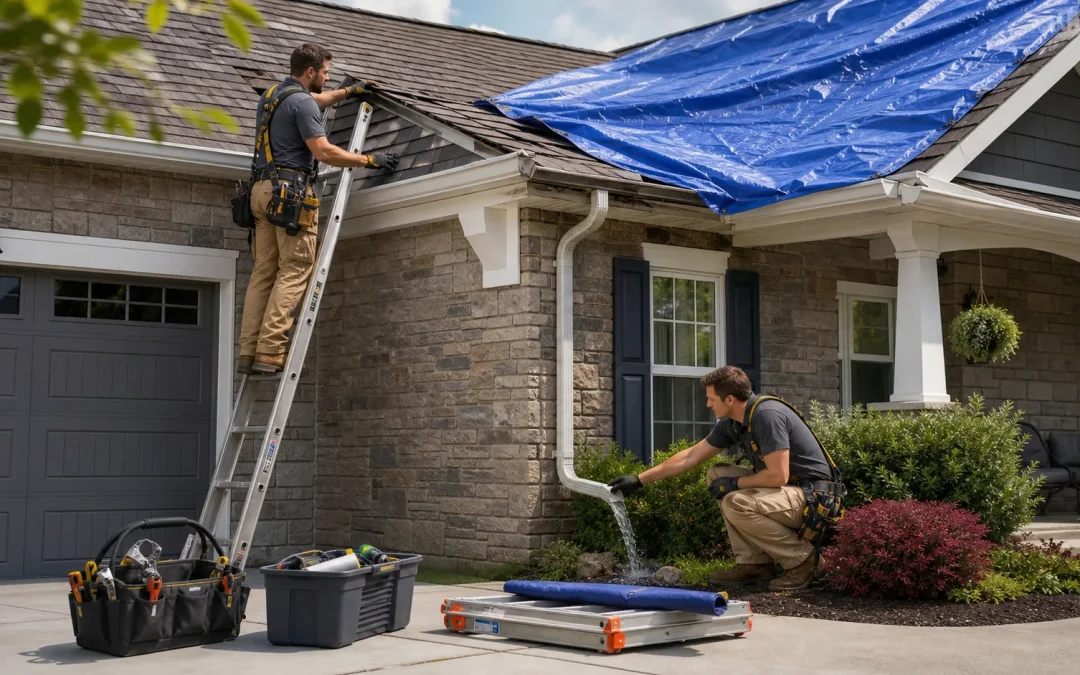
Roof tarping is one of the most common first steps after a storm. This job is much safer and more effective when done by trained pros. A tarp that is not fastened correctly can flap, rip more shingles, or trap water. It can even affect warranty coverage if nails are placed in the wrong spots. With professional storm damage restoration services, exposed roof areas can be covered in a way that sheds water instead of pooling it.
For windows and glass, the goal is to seal sharp edges and stop water. Homeowners will often:
- Keep kids and pets away from any broken glass
- Cover cracked panes with plastic sheeting on the inside to hold small pieces in place
- Use painter’s tape around the edges of broken glass until a pro can secure it
If the opening is large or the frame is damaged, sturdy temporary coverings may be needed to close the opening until full repairs are done.
For siding and exterior walls, loose panels or holes can let water reach the sheathing and interior walls. Until a contractor can arrive, some people gently brace loose panels so they do not blow off. Around outlets, vents, and light fixtures, keep an eye out for water staining or drips inside.
Temporary repairs are not just for protection. Insurers usually expect homeowners to act quickly to limit further damage. When temporary work is done by a professional contractor, it can also serve as strong proof of the original damage and the steps taken to protect the home.
Who to Call First and How to Sequence the Pros
The order of your calls after a storm can make everything smoother.
Start with emergency services if:
- You smell gas
- There is active fire risk
- Power lines are down and sparking
Once any urgent hazards are handled, your next call should be to a contractor that focuses on storm damage restoration services. A full exterior inspection of your roof, windows, and siding before or alongside the insurance adjuster often leads to a clearer scope of work. A storm-focused contractor knows how hail and wind show up on roofing, glass, frames, and siding, even when damage looks minor.
After you have an initial inspection and photos, then contact your insurance carrier or agent. With early findings in hand, you can describe the damage more clearly and request a visit from an adjuster. When a contractor meets the adjuster on site, they can point out non-obvious damage, explain roofing and siding terms in simple language, and help avoid a small patchwork estimate that leaves issues behind.
Homeowners who bring in a dedicated storm contractor early often see better long-term results. Instead of scattered repairs on only the most obvious areas, they are more likely to receive approval for full replacement where it is truly needed so the home looks consistent and performs the way it should.
Smart Bundling of Repairs and Claims for Long-Term Value
Storms rarely hit just one part of your home. If your roof is damaged, there is a good chance your gutters, windows, wraps, and siding were also hit. Treating these as one project has clear benefits.
Bundling repairs can:
- Reduce the number of visits and days with crews on site
- Lower the chance of mismatched shingles, siding colors, or trim styles
- Help the roof, walls, and openings work together as one tight system
One storm claim can often cover more than just the roof. With careful inspection and clear documentation, many homeowners are able to address roofing, gutters, windows, and siding under a single event when the damage is related. Contractors like ours help explain what is commonly covered and what is not, while understanding that the insurance company makes the final call.
Quality matters too. Impact-resistant shingles, sturdy window materials, and properly installed siding can help your home stand up better to future hail and wind. When we plan a project, we look at long-term performance and manufacturer-backed options so repairs are not just quick fixes.
Some homeowners also time storm repairs with planned upgrades or new construction roofing. When work is grouped, it can improve curb appeal and energy performance while keeping the project more organized and easier to manage.
From Emergency Fix to Full Restoration and Future Readiness
Once the roof is tarped, windows are secure, and siding is stabilized, the work shifts from emergency mode to full restoration. That process usually follows a simple path:
- A detailed inspection report with photos and notes
- A written estimate that lines up with what the carrier approves
- Project scheduling that fits your household’s needs
- Clear communication while crews are on site
- A final walkthrough to confirm that work matches the scope
A well-managed project feels steady, not rushed. Homeowners appreciate when the contractor coordinates with the insurer on any needed supplements or code-related updates and keeps them informed about timing, noise, and access around the home.
Looking ahead, a few small habits can make the next storm easier to handle:
- Keep a set of “before” photos of your home’s exterior
- Save “after” photos once repairs or a new roof are complete
- Plan periodic roof and exterior checkups, especially after big storms
- Take time to read through the basics of your policy so surprises are fewer
At Act Roofing & Restoration, we build our process around care, clear information, and thorough storm damage restoration services for roofs, windows, siding, and new construction roofing projects. Our goal is to move you from stress and short-term patching to a home that is restored, protected, and ready for whatever the next storm brings.
Common Questions About Storm Damage and Repairs
How soon after a storm should I schedule an inspection?
As soon as it is safe to walk your property, it is a good idea to arrange a professional inspection within the next few days. Early checks help catch hidden roof, window, and siding issues while the evidence is fresh, and timely documentation often supports a smoother claim process.
What if I do not see any obvious damage from the ground?
Hail and wind can leave subtle marks that are hard to see from your yard. A free, no-obligation inspection from a storm-focused contractor removes the guesswork and lets you “check just in case” without risk.
Will my insurance rates automatically go up if I file a claim?
Rate decisions are usually based on wider storm events in your area, not only on one claim from one home. It is wise to talk with your agent about how your policy works. Ignoring real storm damage can lead to bigger repair needs later, which can be far more stressful.
Can I choose my own contractor, or do I have to use one the insurer suggests?
Homeowners are generally allowed to select their own contractor. Working with a team that specializes in storm damage restoration services and is experienced with documentation and adjuster communication can help keep your project and your claim aligned.
Is it better to repair now or wait and see if leaks develop?
Waiting often makes problems worse. Water can travel through small openings and cause hidden moisture, mold, and deeper structural issues over time. Prompt, professional repairs protect both the outside and inside of your home and can be planned to fit with larger needs, including new construction roofing when that is part of your long-term plan.
Get Started With Your Project Today
If your home has been hit by a recent storm, we are ready to guide you through every step of repair and insurance coordination. Learn how our storm damage restoration services can help you protect your property and restore your peace of mind. The team at Act Roofing & Restoration will assess the damage, explain your options, and move quickly to prevent further issues. Reach out through our contact us page to schedule your inspection today.