

Protecting Your Roof Claim Before Storm Season Hits
Strong late-summer storms in our part of the country can roll in fast. Hail and high winds can bruise shingles, dent metal, crack siding, and chip windows without causing an immediate leak. Much of this storm-related damage cannot be seen safely or clearly from the ground. By the time water stains show up on your ceiling, some of that damage may be considered old in the eyes of your insurance company.
Waiting too long to act can make an insurance claim for roof damage harder. Carriers may say the damage came from wear and tear or from a storm that is now outside the time limit to file. That can mean lower payouts or denied claims.
Understanding your policy before storms hit puts you in a better spot. When you know your coverage limits, your deductible, and whether you have Actual Cash Value (ACV) or Replacement Cost Value (RCV), you have fewer surprises and more control over what you pay out of pocket.
Our family has been inspecting storm damage and restoring roofs, siding, and windows since 1992. As a family-owned company, we focus on hail and wind damage and guide our customers through the full insurance claim and repair process so all covered damages are addressed according to policy terms. Our free, no-obligation storm inspections and clear reports help homeowners get a fair, accurate look at what a storm really did to their home, especially damage that is not visible from the ground.
What Your Policy Really Covers When Your Roof Is Damaged
Most homeowners policies are written to cover sudden, accidental damage, not long-term problems. That means storm damage typically falls into a different bucket than an old, worn-out roof.
In simple terms, policies usually:
- Cover: Hail strikes, wind damage, fallen branches, and other sudden storm impacts
- Exclude: Age-related wear, poor maintenance, and pre-existing problems
If an adjuster decides the shingles were already at the end of their life, they may say the storm only made an old problem worse. That can reduce what the insurance company pays on a claim.
You also have coverage limits. These are the maximum amounts your policy will pay for a covered loss. If the cost to fully repair or replace your roof, siding, gutters, and windows is higher than that limit, the extra cost falls on you. On top of that, some policies have exclusions such as:
- Cosmetic-only shingle damage
- Certain roof ages or layers of shingles
- Specific materials or upgrades
In many storms, it is not just the roof that gets hit. Hail and wind can also damage:
- Siding and trim
- Gutters and downspouts
- Fascia and soffit
- Window glass, frames, and wraps
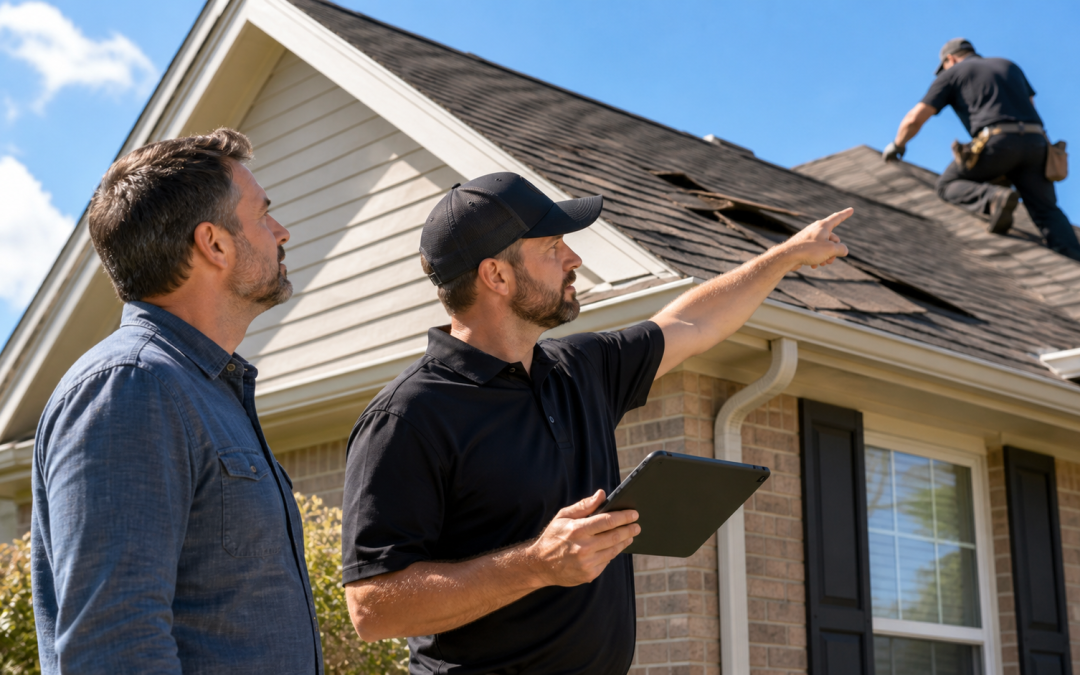
A careful inspection from a trained storm specialist helps catch all of that. From the ground, a roof can look fine, but up close we may see bruised shingles, broken seals, soft spots, and other hail and wind damage that are easy to miss. Our free, no-obligation inspections include photos, measurements, and detailed notes so there is a clear record of what the storm did. That documentation, combined with our experience coordinating efficiently with insurance companies, can make a significant difference when your insurance company reviews your claim.
How Deductibles Affect Your Out-of-Pocket Costs
Your deductible is the part of a covered loss that you are responsible for paying. The insurance company subtracts the deductible from what they pay you on an insurance claim for roof damage.
There are two common types:
- Flat-dollar deductible, such as $1,000 or $2,500
- Percentage-based deductible, often a percent of your home’s insured value, used in many wind and hail policies
Here is a simple example. Say your approved covered repairs add up to $12,000 and your deductible is:
- $1,000: The insurer pays $11,000 and your share is $1,000
- $2,500: The insurer pays $9,500 and your share is $2,500
That deductible is set by your policy. Contractors are not allowed to waive or hide it, and insurance companies expect you to pay it. What we can do is help you make sure every covered repair is listed and priced correctly so you get the full benefit of the coverage you are paying for.
It is smart to review your deductible before storm season. Many homeowners do not realize they have a higher wind and hail deductible until they file a claim. We walk through estimates and insurance paperwork with our customers so they can see exactly how their deductible fits into the repair plan and timing, helping them stay on budget.
ACV vs. RCV Roof Coverage and Your Final Payout
One of the biggest factors in your payout is whether your policy pays on an ACV basis or an RCV basis.
- Actual Cash Value (ACV): What your roof is worth today, after subtracting depreciation for age, condition, and material
- Replacement Cost Value (RCV): What it costs to replace your roof with similar quality materials at today’s prices, usually without permanent depreciation
With an RCV policy, insurance often pays in stages:
- After the claim is approved, you receive an initial check for the ACV amount.
- Once the work is completed and verified, the carrier releases the remaining amount, called recoverable depreciation, up to your approved RCV, minus your deductible.
With an ACV-only policy, that second check for depreciation usually does not exist. You get one payment that already has depreciation taken out. That can leave you paying a much larger share if your roof is older.
A clear, detailed estimate is key for both types of policies. Our team prepares full, code-compliant scopes of work so the adjuster can see what is needed to bring your home back to proper condition. We coordinate efficiently with adjusters during inspections and reviews so roof, siding, gutters, and windows damaged by the same storm are all considered under your coverage.
Step-by-Step: From Storm Damage to Restored Roof
After a hail or wind event, safety comes first. Do not climb on the roof. From the ground, you can:
- Look for missing or lifted shingles
- Check for dented gutters and downspouts
- Look at siding and window frames for chips, cracks, or paint loss
- Snap photos of anything you can see from a safe spot
The next step is to get a professional storm inspection. Our team checks the roof, siding, and windows up close. We look for signs of hail bruising, wind uplift, seal failures, and other issues that are easy to miss without training or proper access. We focus on finding storm-related damage that may not be visible from the ground so you have an accurate picture of your home’s condition.
Based on what we find, we can help you decide if filing an insurance claim for roof damage makes sense for your situation. If you move forward, we guide you through each step of the claim. We meet with the insurance adjuster, point out the damage, and share our documentation. Once the insurance estimate arrives, we review it with you to see if all needed items and code-required work are covered. If there are gaps, we help explain why certain repairs are needed so you can pursue the coverage your policy provides.
When repairs are approved, we manage the project so it runs smoothly and stays on schedule and within the agreed budget. That includes planning the schedule, ordering materials, and coordinating crews. We use top-quality roofing, siding, and window materials and follow thorough installation practices according to manufacturer guidelines and local codes. This approach helps ensure your restored roof, siding, and exterior deliver long-lasting results.
Turn Your Roof Claim Into a Long-Term Upgrade
An insurance claim for roof damage does not have to be stressful. When you understand your coverage limits, your deductible, and whether your policy is ACV or RCV, you can approach storms with more confidence and fewer surprises.
At Act Roofing & Restoration, we have been family-owned and customer-focused since 1992. We specialize in hail and wind damage to roofs, windows, and siding, and we provide free, no-obligation storm inspections to identify damage that may not be visible from the ground. We combine detailed inspections, strong customer service, clear communication, and efficient coordination with insurance companies to help homeowners get the full benefit of their coverage.
Our goal on every storm restoration project is simple: restore your home’s exterior correctly, on time, and on budget, using top-quality materials and thorough installation practices that are built to last. We work to meet or exceed your expectations at every step of the claim and repair process.
Protect Your Home And Simplify Your Roof Insurance Claim Today
If you are unsure where to start with your insurance claim for roof damage, we are here to walk you through every step so nothing gets overlooked. At Act Roofing & Restoration, we help you document the damage, work with your adjuster, and make sure your roof is restored properly. Reach out today through our contact us page to schedule an inspection and get practical guidance on your next steps. Let us help you protect your home and move your claim forward with confidence.